Dictation software or AI documentation: two different tools compared
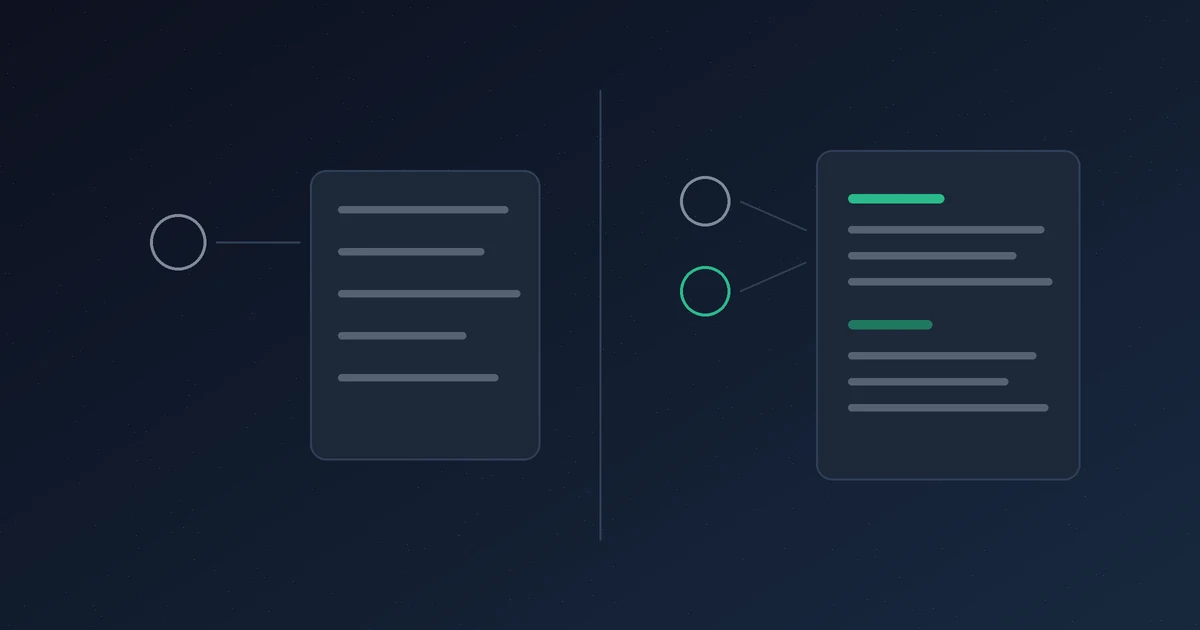
Dictation software and AI documentation are two different tools: dictation software transcribes the words of a single speaker word for word, while AI documentation structures a conversation between two people into a draft that the doctor reads and corrects. Which one fits depends on the situation.
Editorially checked against product behaviour and the stated primary sources; not individual medical or legal advice.
The difference in one sentence
Dictation software transcribes the words of a single speaker exactly as they were spoken. It replaces the keyboard with the voice but changes nothing about the order: what is spoken ends up in the text afterwards — sentence by sentence, word for word.
AI documentation listens to a conversation between two people and produces a structured draft from it. The result is not a verbatim transcript but an ordered version of what was discussed in the room. The difference is not in the quality of the speech recognition, but in the task itself: typing up one voice, or structuring a conversation.
What dictation software does well
Dictation software has one clear strength: the text matches exactly what was spoken. Nothing is added, nothing is rephrased. That makes it reliable for situations where only one person is speaking and the exact wording matters.
- The wording is predictable: after speaking, whoever dictated it knows exactly what is in the text.
- It works without a second speaker — for a short note after the consultation, or for a letter.
- Every sentence comes from the doctor themselves — there is no draft to check for invented content, because nothing is invented.
- Corrections concern individual misrecognised words, not the structure or meaning of the text.
What AI documentation does differently
AI documentation starts from a different point: it processes what the doctor and the patient actually said during the consultation, and derives a draft with a fixed structure from it. Speaker attribution decides which statement is assigned to which person — the structure comes from that attribution, not from the text alone.
The practical difference shows up in the workflow: with dictation software, the consultation has to be summarised mentally before it is spoken. With AI documentation, that intermediate step falls away — the draft is created from the conversation itself. What does not fall away is responsibility for the content: the draft is a proposal that is read and corrected, because the record must reflect the treatment as it actually happened.
The effort shifts, it does not disappear
Both approaches cost time, just at a different point. Whoever dictates first forms the sentence mentally and then speaks it — that thinking step happens before speaking. On top of that comes the correction of individual misrecognised words after dictating.
With AI documentation, forming the sentence in one's head falls away, but the draft demands a complete read-through: a sentence that was not actually said, or a statement attributed to the wrong person, has to be caught before it is carried over. One is not a substitute for the other — it is a different kind of effort with a different kind of error.
Which tool fits which situation
Which tool fits depends on the situation, not on a general preference.
- A short note after a routine appointment: dictation software is direct, with no detour.
- A letter with a fixed structure: dictation software delivers exactly the wording that was intended.
- A longer conversation with a patient: AI documentation takes over the summarising.
- A consultation with a companion in the room: AI documentation then has to attribute three voices instead of two — a case that does not even arise with dictation.
- A conversation in English that needs to be documented in German: dictation reproduces what was spoken; the German version then becomes a separate step of work.
- A practice where the doctor is alone in the room: both tools are possible, and the decision then turns on speed and control rather than on the number of speakers.
Why the choice is not either-or
A practice does not have to commit to one tool. A short follow-up appointment, a letter and a long first consultation place different demands, and nothing speaks against treating them differently.
KiPT Voice reflects this case without being a standalone dictation program: alongside the templates for consultations with two people, there is an editable dictation template. It sets out a structure with the sections Anamnese, Befund, Beurteilung and Prozedere (history, findings, assessment, plan), and does not attribute speakers when only one person is talking. This is a template within the tool, not a complete dictation program.
Frequently asked questions
Is AI documentation a better version of dictation software?
No, it is a different tool for a different task. Dictation software reproduces word for word what one person says. AI documentation structures a conversation between two people into a draft. Neither replaces the other in every situation.
Can I keep dictating if I use an AI tool?
Yes. The two approaches are not mutually exclusive. For a short note or a letter, dictation software remains a sensible choice, even if the same practice uses an AI tool for consultations with a patient conversation.
Does dictation software recognise two speakers?
Dictation software is designed for a single speaker and assigns the entire text to that one voice. A conversation between two people needs speaker attribution, of the kind AI documentation performs — dictation software does not offer that function.
What do I need to check on a draft that I don't need to check on a dictation?
With a dictation, it is enough to check for misrecognised words, because the content comes from you yourself. With an AI draft, it must also be checked whether every statement was actually made that way and attributed to the right person, before the draft is carried into the record.